About Beth…
What We Love To Hate (And Hate To Love) About Yellowstone’s Beth Dutton
Yellowstone: America’s New Frontier?
The first episode of the last half of the final season of “Yellowstone” aired this past week. After frustrations from delays, drama, and an alleged lawsuit prompted by Kevin Costner’s scheduling conflict with filming, the wait for the grand finale of the epic series has been a drawn out affair, with much speculation and anticipation over the story’s end.
“Yellowstone,” the critically acclaimed drama series, has captured the hearts of audiences since its debut in 2018. As of November 2024, the show has amassed over 14 million viewers per episode, making it one of the most-watched cable dramas in history. The series, created by Taylor Sheridan, has garnered numerous accolades, including several Primetime Emmy nominations. Its rich portrayal of family dynamics, power struggles, and the complexities of land ownership has resonated widely, leading to a loyal fan base and extensive discussions across social media platforms. The success of “Yellowstone” has not only led to multiple spin-offs, such as “1883” and “1923,” but has also sparked renewed interest in Western-themed storytelling, showcasing the enduring appeal of the genre.
“Yellowstone” follows the Dutton family, led by John Dutton (played by Kevin Costner), and explores a new view of modern issues facing rural America, such as the experiences of Native Americans and the impact of politics and industrialization on agriculture, albeit in their most dramatic form.
In this violent new wild west, Yellowstone cowboys, to prove loyalty to Dutton, get branded right long with the cattle; land grabs make developers billions; Native Americans brood and plot revenge; and politicians are bought and sold by the world’s largest oil and lumber corporations. Drinking water poisoned by fracking wells and unsolved murders are not news so much as consequences of living in this new frontier of Sheridan’s making. It is the best and worst of America as carried out by a saddle-slinging, helicopter-hopping ranch family that seems to represent both.
Beth Dutton: A Controversial Enigma
Not only are the issues in the story highly dramatized, but so are certain characters—some more than others. With numerous complex and memorable characters, one that has grown into a franchise all her own is John Dutton’s daughter, Beth, played by English actress Kelly Reilly.
Comments across the board seem to be an equal mix of those that admire Beth Dutton and want to be like her, and those that can’t stand her, and are completely annoyed and disgusted by her behavior.
While Beth does embody rationality and determination, coupled with a spitfire, ambitious nature, she also often expresses intense and unstable emotions, becoming angry, anxious, or depressed without valid reason. These swings from hard-nosed cutthroat business woman to scream-crying psycho-bitch can be a lot to sit with in the space of your average 40-minute episode. Still, many viewers find elements of the character they admire, as evidenced by all the fan swag with Beth quotes and references galore.
Things We Love To Hate About Beth
Spoiled little rich daddy’s girl is one way to sum up Beth Dutton. While the men are up before the crack of dawn, saddling horses and braving the elements, Beth languishes in her king sized, down comforter-covered bed, sleeping off the prior night’s whiskey drunk and extra-curricular exertions with Rip. She answers to no one—ever—and challenges anyone and everything that might suggest she consider anyone else’s point of view other than her own. And her objections are anything but subtle (Drama Queen being an understatement here).
To call Beth Dutton a rancher’s daughter is a slap in the face to the thousands of women who truly are the daughters of real ranchers doing work that real ranchers do—calloused hands, shit-caked boots, wind-burned cheeks and all. They’re driving beat up Fords with toolboxes, rolls of wire and salt blocks in the back, wearing denim and flannel and Carhart coats—not to “look country,” but because they’re warm, functional, and don’t wear out so easy. Real ranch women know what real work is. They grow their own vegetables, break colts to saddle, and bake pies and bread from scratch. It’s a life none of the Duttons, with their personal chef, private helicopter and multi-million dollar performance horses that somebody else rides for them could ever fathom.
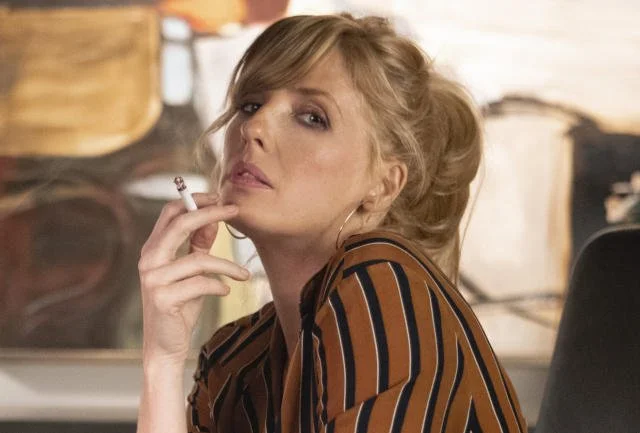
Beth does have an actual job as head of acquisitions in the banking industry, as well as being the executor to the ranch, but we only see fleeting glimpses of her actually doing any work. Scared shitless of horses (which she eventually overcomes with the help of a ranch hand—a job any real rancher father would have done when she was 5), most of the time Beth can be found sitting or strutting around the ranch—always fashionably dressed—or tearing around in her black Bentley, on her way to or from some high-end bar where she undoubtedly verbally castrates any man who mistakenly dares to make the slightest advance. No matter where she is or what she’s doing, she’s chain smoking cigarettes and throwing back whiskey like the seasoned alcoholic she is, hurling cutting remarks, sailor-mouth style. A master manipulator with narcissistic qualities, Beth is bitter, abrasive, amoral, sadistic, volatile, selfish and emotionally unstable—basically a great example of a person with borderline personality disorder with psychopathic tendencies.
And yet… there are plenty of fans who see past Beth’s selfish, spoiled, cushy, non-rancher-ness to the strong-willed woman she is, battling her demons and taking care of her own, even if (or maybe because?) she goes full tilt psycho now and then to get it done.
What We Hate To Love About Beth
Beth’s uncompromising loyalty to those she loves—even when it’s not necessarily expressed in a healthy way—is a trait many people admire about her character. Her unwavering commitment to her father and his determination to save the ranch, no matter the cost, and despite her own awareness of the futility of his desire, casts a more compassionate and even honorable glow to her otherwise very self-serving personality. When it comes to her family (with the exception of Jamie, of course) Beth is fiercely loyal and would do anything for the people she loves, and she becomes incredibly vengeful with a take-no-prisoners approach to getting even with those she feels have betrayed her or her family. This brand of uncompromising familial devotion can be appealing, and as a natural leader, Beth possesses an unfaltering confidence and a relentless drive that proves brains are every bit as powerful as brawn. It is this energy that seems to make her character, as a woman, most appealing to her devoted fans.
Sheridan has a knack for creating strong female characters, challenging Hollywood's norms about women. He is casting older women—those in their 40s, 50s, 60s, and beyond—in leading roles, which is new for the industry. At 45, actress Kelly Reilly, who plays Beth Dutton, exemplifies this shift. Not only that, but her character is a woman unmuzzled, and in no danger of being seen as dull and complacent or suffering from sickly sweet Good Girl Syndrome. Beth Dutton takes no crap and gives no f*cks, whatsoever—particularly when it comes to going up against men accustomed to having their say and getting their way. Basically, she’s not concerned with coming across as a bitch. She knows what she wants and goes after it—unapologetically—with the same aggression as any male counterpart, while using all the weaponry of her feminine prowess to the fullest extent.
And yet—and this is what saves Beth from being a two-dimensional caricature—even though she’s tough and confident and is pretty darn good at taking care of herself, there are those she trusts implicitly and with whom she dares to—on occasion— let down her guard and be completely vulnerable.
For all of Beth’s huff and drama, cursing, punching and screaming, when we get a rare glimpse of the tenderness and injury there under all the poison-spiked armor, we can’t help but feel—just as it is with so many of us—there still may be something there worthy of love, after all.