L’Amour Country
First published in the syndicated print column, Strictly Haresay.
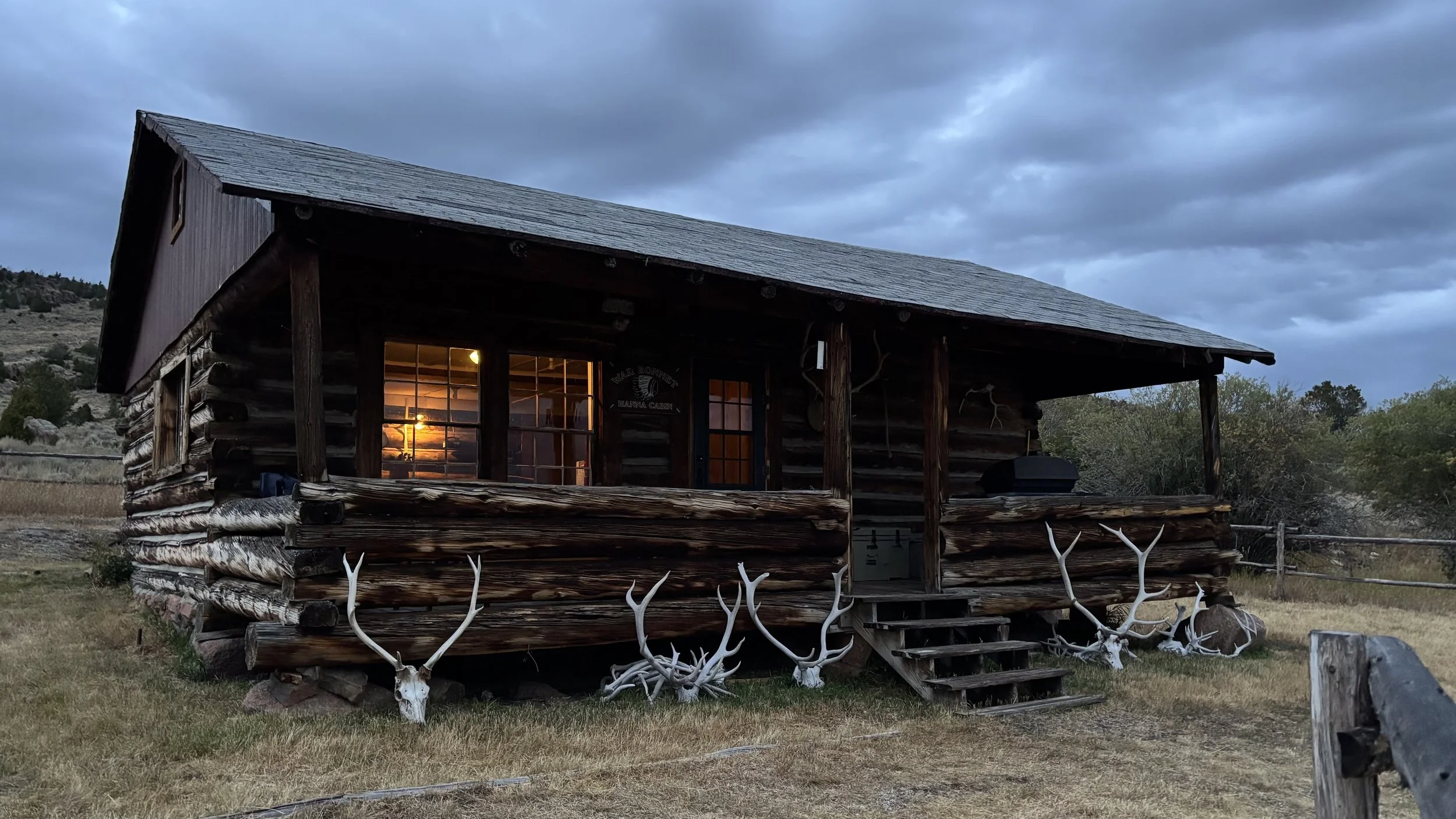
I am writing this week’s column from a two-room log cabin tucked up in the Laramie Mountains of Wyoming—no electricity, no running water. A separate primitive privy—more recently built than the cabin—boasts actual plumbing that is gravity fed by a natural spring a little ways up the ridge.
Locals call this area “the high valley,” and at 7,835 ft. elevation, the view of the wide grassland below the granite-studded slope where the cabin sits is spectacular. From this high perch, scudding clouds and thunder rumbles feel so much closer, and the nighttime sky that much deeper, its stars just barely out of reach.
I am told this 16 x 20-foot rustic cabin was hand built in 1930 by a guy with a peg leg who, despite this impediment, felled and hewed each log with no more than an ax. And though the floor is a bit wavy from its rock foundation having settled over the years, the structure itself is still solid.
I am here as camp cook for an outfitter guiding a series of elk hunts. Though the limited amenities and lack of modern conveniences make for a challenge in feeding large groups of hungry men (and the occasional woman), I thoroughly enjoy the adventure, and the opportunity to revel in such a stunning landscape.
This ruggedly beautiful area in which I find myself at present is Louis L’Amour country—or, at least, a piece of it. And on a rough cut, two-board shelf in the cabin there is a small collection of some of his novels. Despite the fading of their covers, and the brittleness of the yellowed pages, the characters and settings of his stories remain as vivid and alive as ever. (Merely one of the many magical elements a good book has to offer.)
This is not my first year as a camp cook with this outfit, though it is my first time at this particular location. The intervening months between this hunt season and last year’s have, for me, been quite significant. A lot has happened over the last 12 months, so having the chance to get away from the normal routine of things—plus the added benefit of these wide, sweeping wilderness views—is something I have been needing. A change of pace with different scenery so often can offer a person a new perspective on things—as can a good book that finds you at just the right time. Like one recent sunny afternoon when I found myself with some spare time before starting the preparations for supper, and I took down one of L’Amour’s novels entitled, Lonely On the Mountain, which seemed rather fitting. I opened the dusty tome, written more than 40 years ago, to discover a very personal message from Mr. L’Amour, magically crossing the boundaries of time and reality like only books can do. As I sat under rough-hewn timbers of a front porch that could have existed in any one of his western novels, gazing out over a landscape that still lives in his words, as much as it exists here before me today, L’Amour spoke directly to me, offering comfort and wisdom from the beyond the grave, in this, his opening line: “There will come a time when you believe everything is finished. That will be the beginning.”