The Cost of the Written Word
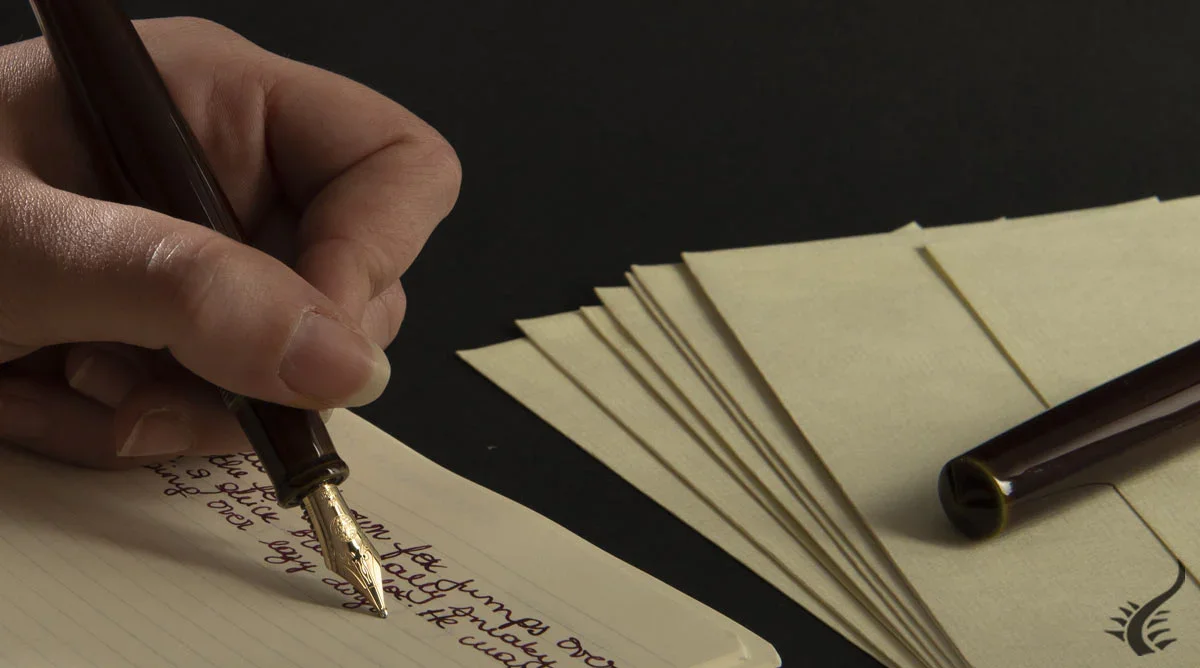
Those who follow my writing endeavors beyond the scope of SCJS, and are subscribed to my newsletter, already know that I am in the thick of working on book number three. This is my first historical novel, and I’ve been enjoying researching certain specifics of life in the 1860s in West Texas—which is the main setting for much of the story.
Long ago, when I first discovered the joys of creative writing, I did all my work in long hand, filling spiral notebooks, loose leaf pages, and later, blank hardbound books with words penned—literally—in cursive. I developed a kind of code system of editing (which I still use today) for those instances where you need to insert a huge paragraph that’s written on another page, or jump to a new section and come back to pick up where you left off, and a dozen other tricks one needs in order to make up for the easy editing accomplished with a couple key strokes on the laptop.
In my excitement for diving into this historical story, I decided I was going to do much of the preliminary writing in long hand—at least for the first draft—instead of punching it out on a keyboard. And in so doing, I’ve rediscovered the pleasure in the process of pushing a pen across the page, watching the story unfurl one inked word at a time. The act of holding and maneuvering a pen, and the added time it takes to form letters, linking words into sentences that represent the ideas flowing through the mind is such a different experience than typing.
I had forgotten.
Writing by hand forces you to go slower, giving you time, before your hand catches up with your brain, to make a different word choice, upgrade the verb, ponder the punch. For me, writing by hand is a much richer experience. And though some might contend that it is too inefficient by today’s standards, I would argue that point. I believe going slower serves to make the end product of that first draft better quality, requiring less editing and “beefing up” later.
I was attempting to articulate all this in a recent conversation I was having with a gentleman who was lamenting the fact that cursive writing is no longer taught in most schools. His position on the subject was that only learning to print and type constitutes a “dumbing down.”
So, given my own recent experience, I decided to get geeky on the topic and do some digging into how our brain functions under these very different methods of expression. What I found was rather fascinating.
When comparing printing by hand to cursive writing, studies have shown that although both styles of writing engage the brain’s motor and visual systems, cursive’s fluid, continuous motion activates greater connectivity across the brain, engaging regions involved in language, memory, and motor control. The flowing strokes create what researchers call “hooks” for memories, improving retention and recall. Neuroscientists suggest the continuous, rhythmic motion of cursive enhances communication between the brain’s left and right hemispheres, potentially boosting cognitive flexibility. All this brain activity stimulates thinking, creativity, and memory.
When comparing any kind of handwriting—be that printing or cursive—to keyboard typing, the differences are much more pronounced. The motor skills needed to coordinate our fingers to hold and manipulate a pen or pencil activates multiple areas of the brain simultaneously and requires it to process many things at once: fine motor movement to control the pen, directional awareness (center, up, down, left, right) necessary for letter formation, kinesthetic awareness of the flow of the pen and hand across the paper, and visual recognition of the shapes of the letters.
While these motor, kinesthetic, and visual aspects of writing are being processed, the language networks in the central and temporal lobes of the brain are engaged for thought formation and expression. In addition, the corpus callosum (the brain structure connecting the two hemispheres) is actively transferring neural information back and forth, the networks related to reading and spelling come into play, and our memory and learning centers are activated. All this brain activity stimulates thinking, creativity, and memory. Conversely, striking the letters on a keyboard requires much less of the brain, with many fewer neural connections being made. Using individual fingers to strike single keys creates a repetitive pattern to create specific letters – this, of course, allows for the speed and efficiency of typing. However, these repetitive movements do not engage the motor cortex for fine motor control or directional awareness, and much less kinesthetic information is being sent to the brain. Additionally, the visual system functions differently with the keyboard – letters appear instantly as completed images, while in writing the letters emerge gradually.
As of 2020, only 21 states in the U.S. require cursive to be taught. The use of paper and pen is now seen as an almost archaic method of communication. And it is not just children for whom handwriting is becoming irrelevant. As adults, we email rather than write letters, send texts, put shopping lists on our phones, dictate reminders on our smartphones, use bill-pay, and keep our diaries in our computers.
While it is true that the keyboard is much easier and faster, what is the cost? What are we losing?
For me, the experience of going back to handwriting a manuscript has had its own rewards. And though I may not be cranking the words out as fast as I could if I were typing them, I’m happy to report I think this book constitutes some of my best writing to date. Whether or not that’s related to my chosen method of getting the words down on paper, I’m not sure. But I’m going with it.