The Art & Nature Connection
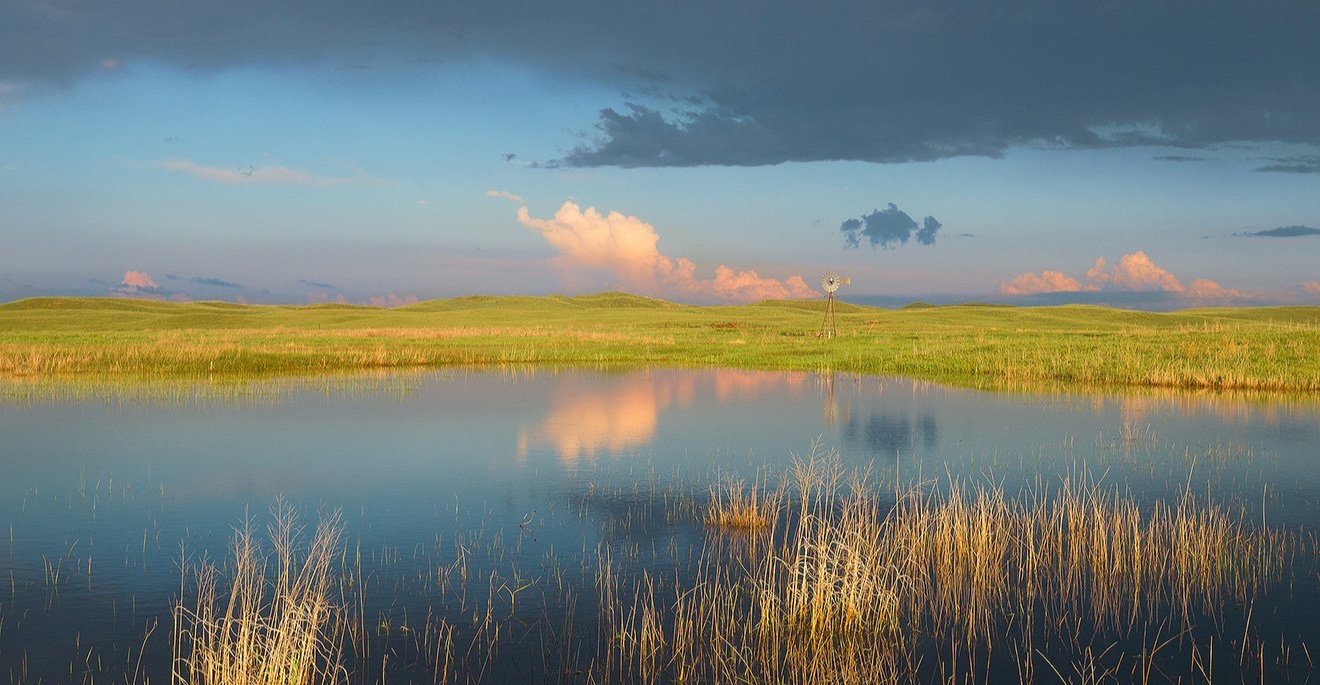
The Sandhills prairie of western Nebraska
How Vast Horizons Inspire Creativity
The Power of Open Space
Earlier this week I was reflecting on all the writers and creatives that have come out of this great state where I was born and raised, and that the common denominator they have, which I admit to sharing, as well, is an acute appreciation for the vastness of life here in the Great Plains. While I won’t argue about the importance of setting personal boundaries, it would seem when considering actual spatial borders, creative minds thrive where those distinctions disappear—like here in the Sandhills of western Nebraska, which offers an infinite landscape of earth and sky in an endless variety of hues.
Geographies That Shape Our Interior Landscape
Contrary to popular perception this vast openness is much more than an empty void. For lovers of the natural world and creatives, it is a living canvas. But this connection between art and nature is not about simply replicating a pretty view; it is about how a specific geography shapes the interior landscape of the person looking at it. I can attest to this from personal experience. In my own writing process, getting outside—seeing the colors and shapes of the clouds moving through, taking in the expansive view of the gently rolling plains and the shifting waves made by the grasses bending in the wind—all serve to open up the imagination, expand possibilities, and never fail to inspire me to reach for something greater than I had initially intended.
Mining Inspiration From the American West
Nebraska has quietly nurtured some of the most distinctive voices in American arts and letters, I think precisely because its vast horizons force the creator to look deeper, feel more acutely, and fill the silence and space with their own interpretations and meaning. It is in the wide expanses of the American West that inspiration can be mined from the subtle shifts of wind, a slight variance in light, and shadow. Willa Cather translated this spatial reality into literature, famously writing that the land was “not a country at all, but the material out of which countries are made.” Her prose captured the overwhelming emotional weight of the prairie, showing how a flat horizon can elevate human longing and emotional intensity.
Mari Sandoz looked at the same rugged topography—specifically the raw beauty of the Nebraska Sandhills—and drew out its fierce truth, linking the grit of the terrain directly to the resilience of the people who walked it. For both writers, nature was not a backdrop; it was a key character.
Daring the Imagination to Expand
Famed landscape artist and fellow Nebraskan Keith Jacobshagen creates paintings that are visual proof that the plains are not just flat, and never empty; they are a theater of cosmic scale, where a sunset or a gathering storm carries the weight of a sacred message to the onlooker, if he or she is so inclined to such interpretations. When standing under a sky that takes up four-fifths of your vision, and you are forced to confront your own insignificance, and paradoxically, your own agency, how can one not be moved? In my own experience, this land with its wide-open views does not swallow the artist up in emptiness as many might assume. But rather, the breathing expanse of it liberates the creative mind, daring the imagination to explore its own endless reach.
If you’d like to explore more of my writing inspired by my homeland on the High Plains, click the link below.