MLK’s Dream
(Originally published in my op-ed column, The Nature of Things)
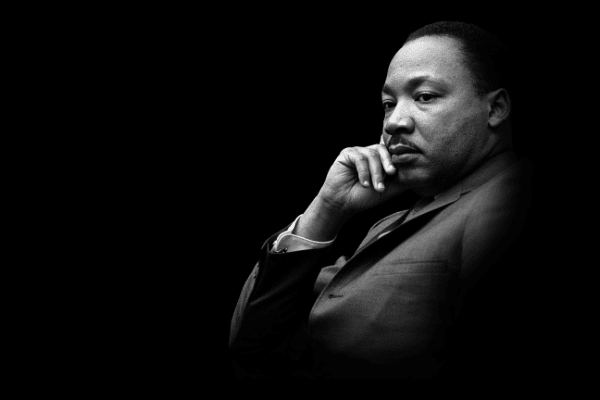
In his ”I Have a Dream” speech, American civil rights activist and Baptist minister, Martin Luther King, Jr., spoke of how Black people could “never be satisfied as long as the Negro is the victim of the unspeakable horrors of police brutality.”
That public speech was delivered during the March on Washington for Jobs and Freedom on August 28, 1963. In the speech, King called for civil and economic rights for all Americans, regardless of race.
That was nearly 60 years ago now, and still the battle continues.
Black Lives Matter—the movement that began with a social media hashtag after the acquittal of George Zimmerman in the shooting death of Trayvon Martin in 2012—has now established itself as a worldwide movement.
In 2014, after the deaths of Michael Brown in Missouri and Eric Garner in New York, and particularly after the more recent death of George Floyd at the hands of police in Minneapolis, MN, Black Lives Matter has spearheaded demonstrations worldwide protesting police brutality and systematic racism effecting Black communities.
It’s the same message King lived and died for six decades ago.
As we look back on Dr. King’s message, and the movement he began so many years ago, one wonders what he might think to see how little things have changed…and how much other things have. Contemporary critics of Black Lives Matter call its activists terrorists — King acknowledged his supporters of the same cause as friends of liberty.
In a proud nation known as the “Land of the Free” that cut its teeth on the spilt blood of its indigenous peoples, and generations of enslaved men and women, to later proclaim, “Give me your tired, your poor...yearning to breathe free,” we still struggle with our own identity as the Great Melting Pot; Home of the Exiles. And as racial prejudice and hostility within this nation of emigrants continues to restrict and ruin lives, we remain an embodiment of contradictions.
It was as recently as 1924 that Pres. Coolidge signed the Indian Citizenship Act, officially granting the nation’s Native Americans citizenship to a land they’d inhabited for centuries, yet it was not until 1965 with passage of the Voting Rights Act that Natives actually had right to vote in any state or territory in the United States. This, after thousands of Natives fought and died in four major wars for a country that still was at odds with the idea of recognizing them as “real” Americans.
Our road to democracy has been a sordid one, stained with so much blood of our own people. Yet this seemingly is the nature of our evolving; the process of our progress.
As we look back this week on King’s legacy and the movement he began, we would do well to remember that today’s young Black activists are no more terrorists than any other disenfranchised group which, down through history in the making of this nation, had to fight to secure their rights as promised by our constitution.
Critics of the BLM movement would have them judged as insurrectionists, yet history records such activists as patriots because they are doing more than just rising up for the sake of a revolt. Willing to risk life and limb for the building up, not tearing down, of America, their disappointment with the nation, their rage against its limits and failures, is but a challenge to the inequities of the status quo, and a personal investment in America’s ongoing story as a democratic society.
For the truth is, any activism conducted within the boundaries of the law, is the democratic system at work, another kind of building block—tried and true— holding the nation accountable, inciting America to reaffirm its principles, its beliefs, its ambitions and its fundamental commitment to that grand promise of democracy and justice for all.